PONS has moved from a relatively obscure ecosystem token to one of the crypto market’s fastest-rising assets in a matter of weeks.
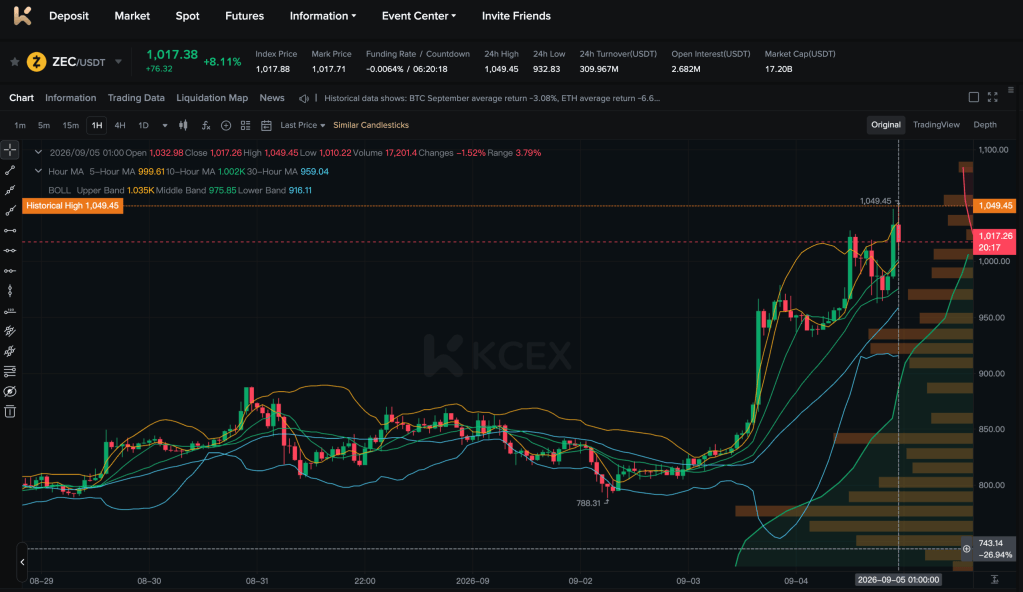
As of September 4–5, 2026, PONS was trading around the $0.70 level across major market-data sources after setting a fresh all-time high near $0.77. The token had gained more than 400% over seven days and more than 2,000% over the previous month, while its circulating market capitalization moved toward the $500 million range.
The scale of the rally naturally raises a question: why is PONS up so much?
The answer goes beyond memecoin speculation. Pons, the token-launch platform behind PONS, has entered a period of exceptional activity on Robinhood Chain. User fees, protocol revenue, token launches and trading volume have all accelerated sharply. At the same time, part of the protocol’s revenue is being used to buy PONS from the market and permanently burn it.
That creates an unusually direct economic loop: more launches → more trading → more protocol fees → more PONS buybacks → lower token supply.
PONS Price and Protocol Activity: The Numbers Behind the Rally
The latest data show how quickly Pons has scaled.
| Metric | Recent Reading |
|---|---|
| PONS Price | Around $0.70–$0.76 |
| Recent All-Time High | Around $0.77 |
| 7-Day PONS Performance | More than +400% |
| 30-Day PONS Performance | More than +2,000% |
| Pons Fees — 24H | Around $6.3M |
| Pons Fees — 7D | Around $32.6M |
| Pons Fees — 30D | Around $46.5M |
| Protocol Revenue — 24H | Around $1.2M |
| Protocol Revenue — 30D | Around $9.0M |
| DEX Volume — 7D | Around $591.6M |
| DEX Volume — 30D | Around $719.4M |
| Original PONS Supply Burned | Roughly 29% |
The most important figure may not be the $6 million-plus daily fee total. It is the rate of acceleration behind it.
Data from the Pons fee and revenue dashboard on DefiLlama show that approximately $32.6 million of Pons’ roughly $46.5 million in 30-day fees was generated during the latest seven-day period. In other words, roughly 70% of an entire month’s fees arrived in one week.
The same pattern appears in trading activity. Seven-day DEX volume of roughly $591.6 million represented more than 82% of the protocol’s 30-day volume. This is not normal linear growth. It is a sharp change in the slope of adoption.
Pons Has Become One of Crypto’s Largest Fee-Generating Applications
At the latest reading, Pons was generating roughly $6.3 million in daily user fees, placing it among the top fee-generating crypto applications tracked by DefiLlama’s protocol fee rankings.
That matters because crypto valuations often move before revenue becomes obvious. In Pons’ case, however, price and fundamental activity are now rising together.
Pons generated approximately $9 million in protocol revenue over the previous 30 days, while cumulative protocol revenue for the current quarter had moved above $13 million at the latest snapshot.
But there is an important distinction: fees are not the same as protocol revenue. Fees represent what users pay when launching and trading tokens. Much of that money goes to token creators and other components of the trading infrastructure. Protocol revenue represents the portion retained by Pons itself.
How the Pons Business Model Creates Demand for PONS
Pons is a permissionless token-launch platform built on Robinhood Chain.
According to the official Pons protocol documentation, users can create fixed-supply tokens, establish trading liquidity and allow those tokens to trade directly onchain.
Under the current V1 structure, a launch uses a fixed supply of one billion tokens, while trades carry a 1% pool fee. Creating a launch also involves a small 0.0005 ETH launch fee.
- 70% to the token creator
- 30% to the Pons protocol
The next step is what makes PONS particularly interesting. Pons’ documentation states that its current protocol-revenue policy allocates approximately 80% of protocol fees to automated TWAP purchases of PONS, with the acquired tokens sent to a burn address. The remaining 20% supports infrastructure and team operations.
Simplified, if a current launch generates $100 in eligible trading fees, $30 may flow to the protocol, and approximately $24 of that could ultimately be directed toward PONS buybacks under the current policy.
The precise accounting varies across products and fee types, but the broader economic mechanism is clear: PONS does not depend exclusively on users deciding to buy the token because its price is rising. Activity on the launchpad itself can create an additional source of market demand.
The Buyback-and-Burn Mechanism Is Creating a Supply Shock
PONS launched with a maximum supply of one billion tokens. Market data currently show only roughly 705 million to 712 million tokens remaining in effective supply, implying roughly 29% of the original supply has already been removed through burns.
- More trading generates more fees.
- The protocol captures part of those fees.
- A portion of protocol funds purchases PONS.
- Purchased tokens are burned.
- Effective supply declines.
- A smaller supply must absorb future demand.
This does not mathematically guarantee that the PONS price will rise. The project’s own documentation explicitly warns that burning tokens is not a guarantee of appreciation. But during a period of rapidly expanding demand, continuous supply reduction can magnify price moves.
Robinhood Chain Is the Second Half of the PONS Story
Pons cannot be analyzed independently of Robinhood Chain.
Robinhood launched its public blockchain mainnet in July 2026 with a much broader objective than memecoin trading. According to Robinhood’s official mainnet announcement, the network is positioned as a permissionless Ethereum-compatible Layer 2 designed for onchain financial services, tokenized stocks and real-world assets.
Yet one of its earliest major sources of activity has come from permissionless token creation. That divergence is important. Robinhood Chain may have been designed around tokenized finance, but its permissionless architecture also allows developers to build applications the network’s original designers may not have expected to become dominant.
Current Robinhood Chain data on DefiLlama put DeFi TVL above $800 million, stablecoin market capitalization near $900 million and daily DEX volume above $1 billion at recent peaks. This means PONS is benefiting from two overlapping growth curves: growth of Pons itself and growth of the blockchain underneath it.
Why “Pons Earns More Than Robinhood Chain” Needs Context
One headline circulating around Pons is that the application generates more fees than Robinhood Chain itself. Numerically, that has recently been true: Pons recorded approximately $6.3 million in 24-hour fees while Robinhood Chain generated roughly $4.5 million in chain fees.
But the comparison is not apples-to-apples. Pons fees include application-level fees generated from token launches and trading. Robinhood Chain fees primarily represent gas paid for blockchain execution.
The correct conclusion is therefore not that Pons has somehow become economically larger than the blockchain. The more meaningful signal is that one application is generating an unusually large amount of monetizable user activity relative to a very young underlying network.
Token Creation Is Turning Into a Network Flywheel
On September 2 alone, reporting based on onchain data estimated that nearly 25,000 tokens were launched through the platform, up roughly 19% from the previous day. Activity during the surge pushed trading volume to several hundred million dollars at its peak.
Different analytics sources currently report different cumulative launch counts, partly because they measure token issuance, active launches, graduated tokens and creator addresses differently. The official Pons interface, for example, currently displays more than 167,000 active launches and more than 2,300 graduated tokens.
This methodological difference is worth noting because raw launch counts should not be treated as equivalent to successful projects. Most permissionless tokens will never develop sustainable liquidity. The economically important metric is therefore not simply how many tokens users create, but how much persistent trading those launches generate after creation.
Pons V2 Could Expand the Model — but It Also Introduces Execution Risk
Another factor worth monitoring is Pons V2. The official Pons V2 documentation describes a revised launch architecture in which tokens begin trading on a bonding curve and graduate into permanently locked liquidity pools.
The design aims to reduce some of the launch-day liquidity and migration problems associated with earlier launchpad models. V2 also introduces more flexible fee structures, token buyback options and longer-term vesting mechanisms.
If successful, these features could improve creator retention and increase the range of assets launched through the platform. But this part of the PONS thesis should not be treated as fully de-risked. The team states that V2 remains under review by multiple independent security teams and that public token creation is still being rolled out in stages.
Is PONS Already Expensive?
At roughly a $500 million circulating market capitalization, PONS is no longer a micro-cap token.
A useful way to frame the valuation is against protocol revenue. Pons generated roughly $9 million of protocol revenue over the last 30 days. Annualizing that number mechanically would imply more than $100 million of revenue.
That would make the current market capitalization appear relatively modest compared with the recent revenue run rate. But doing so without context would be dangerous. Most of Pons’ revenue acceleration occurred during the most recent week. Memecoin-launch activity is highly cyclical, and annualizing a peak week assumes today’s speculative intensity continues for an entire year.
A better question is: How much of the current activity survives after the initial Robinhood Chain token-creation boom cools?
The Biggest Risks to the PONS Price Rally
First, activity concentration is extreme. More than 80% of recent 30-day DEX volume occurred within the latest seven days. That is evidence of powerful momentum, but also evidence that current revenue is highly dependent on a very recent activity burst.
Second, the 80% buyback allocation is a current policy rather than an immutable rule. Pons’ own documentation says the mechanism is expected to become more decentralized and immutable in a future release, meaning the present implementation still carries governance and execution risk.
Third, early PONS holders have accumulated extremely large unrealized gains. Large concentrated positions can become a source of sell-side liquidity if early investors begin realizing profits.
Finally, token-launch markets are reflexive. Activity attracts liquidity, liquidity attracts creators, creators generate more assets, and rising prices attract additional users. The same flywheel can reverse when sentiment changes.
How to Buy PONS on KCEX
For traders who want direct exposure to PONS without interacting with Robinhood Chain wallets and onchain pools, PONS/USDT spot trading is available on KCEX.
Step 1: Create a KCEX Account
Create a KCEX account and complete the required account-security steps. New users may be eligible for rewards of up to 470 USDT, subject to the current campaign terms and eligibility requirements.
Step 2: Deposit USDT
Fund the account with USDT through a supported network. KCEX does not charge a platform deposit fee. Always confirm that the selected blockchain network matches the sending wallet before making a transfer.
Step 3: Open the PONS/USDT Market
Navigate to Spot Trading and search for PONS/USDT, or buy PONS on KCEX through the PONS/USDT spot market.
Step 4: Choose a Limit or Market Order
A market order prioritizes immediate execution at the best available market prices, while a limit order allows the trader to specify a preferred entry price. Given PONS’ recent volatility, reviewing order-book depth and potential slippage before submitting a large order is particularly important.
Step 5: Trade PONS With 0% Spot Trading Fees
One of KCEX’s main cost advantages is its standard 0% maker and 0% taker fee across spot trading pairs. For actively traded assets such as PONS, where traders may enter, reduce or rebalance positions multiple times, eliminating spot trading commissions can materially reduce fee drag.
KCEX also applies competitive futures fees and maintains zero platform-side deposit and withdrawal fees under its published fee policy. Traders should still check supported networks, minimum withdrawal requirements and asset status before transferring funds.
What to Watch Next for PONS
- 7-day and 30-day Pons protocol fees
- Protocol revenue and actual PONS buyback activity
- PONS supply burned
- Daily token launches and post-launch trading retention
- Robinhood Chain DEX volume and stablecoin liquidity
- Pons V2 audit progress and broader public rollout
- Distribution or selling from large early holders
If Pons can maintain meaningful fee generation after the initial speculative surge fades, the market may increasingly view PONS as a revenue-linked ecosystem asset rather than simply a high-beta launchpad token. If activity falls sharply, however, the same revenue and buyback narrative currently supporting the rally could weaken quickly.
Conclusion
The PONS rally is unusual because the price surge is occurring alongside a measurable explosion in underlying economic activity.
Pons has moved into the top tier of crypto applications by daily fees, Robinhood Chain activity is expanding rapidly, and the protocol’s current fee mechanism creates a direct path from platform usage to PONS market purchases and token burns.
That combination explains why the PONS price has been able to move so aggressively. But it also explains the risk. The valuation increasingly depends on Pons converting a historic burst of speculative activity into durable transaction volume.
The key question is no longer whether Pons can attract attention — it clearly can. The question is whether fees remain elevated after the excitement normalizes. For PONS, that will likely determine whether the current rally represents the beginning of a longer-term repricing or one of the most dramatic short-term revenue trades of the 2026 crypto cycle.
This article is for informational purposes only and does not constitute financial advice. Digital assets are highly volatile and may result in substantial losses. Always conduct independent research and assess your own risk tolerance before trading.