The nine U.S. stock futures available on KCEX are not a random collection of names. They represent three coherent investment themes that are defining the 2026 market landscape: the AI infrastructure build-out, the Bitcoin treasury movement, and the rise of crypto-native fintech. Each theme has its own narrative drivers, its own sensitivity to macro variables, and its own risk profile. Understanding how each stock fits within these themes helps traders make more informed decisions about which instruments to focus on and how to size and time their positions.

Theme 1: AI Infrastructure — The Capital Expenditure Supercycle
The dominant theme in global capital markets for the past two years has been AI infrastructure spending. Hyperscalers — Microsoft, Amazon, Google, Meta — have committed hundreds of billions of dollars in capital expenditures to build the data center capacity needed to train and run large language models. This spending cycle has created extraordinary demand for GPUs, networking equipment, power infrastructure, and the software platforms that manage and monetize AI workloads.
On KCEX, three futures instruments are most directly tied to this theme:
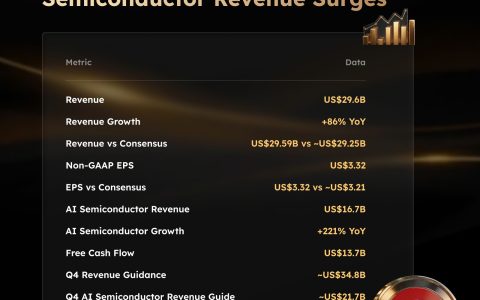
- NVDA/USDT: NVIDIA is the direct hardware beneficiary of AI capex. Its data center GPUs are the primary compute substrate for AI training and inference. Every major AI model — GPT-4o, Gemini, Claude, Llama — runs on NVIDIA hardware. NVDA reports next on May 20, 2026, with consensus revenue guidance of $78 billion.
- GOOGL/USDT: Alphabet sits on both sides of AI — as a major GPU customer for its own data center buildout, and as a company whose core Search and Cloud businesses are being reshaped by AI. Google Cloud’s AI services are growing rapidly, and the Q1 2026 earnings (April 29) will reveal whether AI-enhanced Search is growing revenue or being disrupted by it.
- PLTR/USDT: Palantir is the AI software monetization play — a company that has built its AIP (Artificial Intelligence Platform) specifically for enterprise and government clients who need AI deployed on sensitive, proprietary data. Unlike most AI software companies, Palantir is already GAAP profitable while growing at an accelerating rate.
The key macro signals for this theme: hyperscaler capex guidance in earnings calls, NVIDIA’s own revenue trajectory, and any policy developments around AI regulation or export controls on advanced semiconductors.
Theme 2: Bitcoin Treasury and Crypto Finance — Equities That Move With Crypto
The second theme is more directly tied to the crypto market itself. A cluster of stocks on KCEX function as equity proxies for different layers of the Bitcoin and digital asset economy.
- MSTR/USDT: Strategy Inc. holds over 500,000 BTC and operates as a leveraged Bitcoin treasury vehicle. The stock moves with Bitcoin but at amplified magnitude due to the NAV premium embedded in MSTR’s equity valuation. For crypto traders, MSTR/USDT is one of the most powerful ways to express a Bitcoin directional view through equity futures.
- COIN/USDT: Coinbase is the trading volume play — its revenue rises when crypto markets are active and falls when they are quiet. COIN also benefits from Bitcoin ETF custody fees, which have become a structurally growing revenue stream since spot ETF approval in January 2024. COIN was added to the S&P 500 in 2025.
- CRCL/USDT: Circle Internet Group is the USDC stablecoin issuer. Its equity is a bet on stablecoin adoption and the interest rate environment. CRCL’s sensitivity to U.S. crypto legislation — particularly the CLARITY Act’s stablecoin yield provisions — makes it one of the most regulation-sensitive names in the lineup.
The key macro signals for this theme: Bitcoin price action, spot Bitcoin ETF weekly inflow data, and U.S. crypto regulatory developments (CLARITY Act markup schedule, stablecoin legislation progress).
Theme 3: Fintech Democratization — Retail Trading and Disruption
The third theme spans the companies that are actively breaking down the barriers between traditional finance and digital assets at the retail level.
- HOOD/USDT: Robinhood is the retail sentiment barometer. Its revenue moves with retail trading enthusiasm across stocks, options, and crypto. The stock surged 185–190% in 2025 as retail engagement hit multi-year highs. HOOD is now expanding internationally with tokenized equities for European users, positioning it directly at the intersection of traditional equity access and blockchain-based financial infrastructure.
- TSLA/USDT: Tesla sits in this category partly because of its extreme retail ownership and Musk’s cultural influence on both crypto and equity retail sentiment. Tesla is one of the most widely held retail stocks globally, and movements in TSLA often reflect broader retail risk appetite shifts.
The remaining instrument, INTC/USDT, is a contrarian turnaround play that sits outside these three themes — a semiconductor company attempting to regain competitive position in data center CPUs and foundry manufacturing. Intel represents a different type of trade: a value recovery bet rather than a thematic growth story.
Using Themes to Structure Your Trading
Thinking about these stocks through the lens of their underlying themes helps in several ways:
- Correlation awareness: Stocks within the same theme tend to move together. If you hold both NVDA/USDT and PLTR/USDT, you have concentrated exposure to AI sentiment. A negative AI narrative event — a major model failure, a capex cut announcement, a regulatory overhang — could affect both simultaneously.
- Catalyst alignment: Each theme has specific catalysts. AI theme traders should track NVIDIA’s May earnings date and hyperscaler capex guidance closely. Crypto theme traders should monitor Bitcoin ETF flow data and CLARITY Act legislative progress. Fintech traders should watch retail sentiment indicators and earnings from Robinhood and Coinbase.
- Portfolio diversification: Spreading positions across all three themes reduces correlation risk. AI infrastructure, Bitcoin treasury, and retail fintech themes respond to different macro variables and have different beta profiles relative to the crypto market.
Trade All Nine U.S. Stock Futures on KCEX
All nine instruments are available as USDT-margined perpetual futures on KCEX with 0% maker fees, 0.01% taker fees, and up to 25x leverage.
- NVDA: https://www.kcex.com/futures/exchange/NVDA_USDT
- TSLA: https://www.kcex.com/futures/exchange/TSLA_USDT
- GOOGL: https://www.kcex.com/futures/exchange/GOOGL_USDT
- PLTR: https://www.kcex.com/futures/exchange/PLTR_USDT
- COIN: https://www.kcex.com/futures/exchange/COIN_USDT
- MSTR: https://www.kcex.com/futures/exchange/MSTR_USDT
- HOOD: https://www.kcex.com/futures/exchange/HOOD_USDT
- INTC: https://www.kcex.com/futures/exchange/INTC_USDT
- CRCL: https://www.kcex.com/futures/exchange/CRCL_USDT
Disclaimer: This article is for informational purposes only. Futures trading involves significant risk of loss. Always conduct your own research before making trading decisions.
About KCEX
KCEX is a centralized cryptocurrency exchange established in 2021 and registered in the Seychelles. Guided by the values of “users first, security first, and innovation-driven,” KCEX is committed to providing diversified digital asset trading and investment services, covering futures trading, spot trading, and innovative financial derivatives. Our team is composed of experts in blockchain and finance, with extensive experience and technical capabilities to ensure platform stability and the security of user assets.